

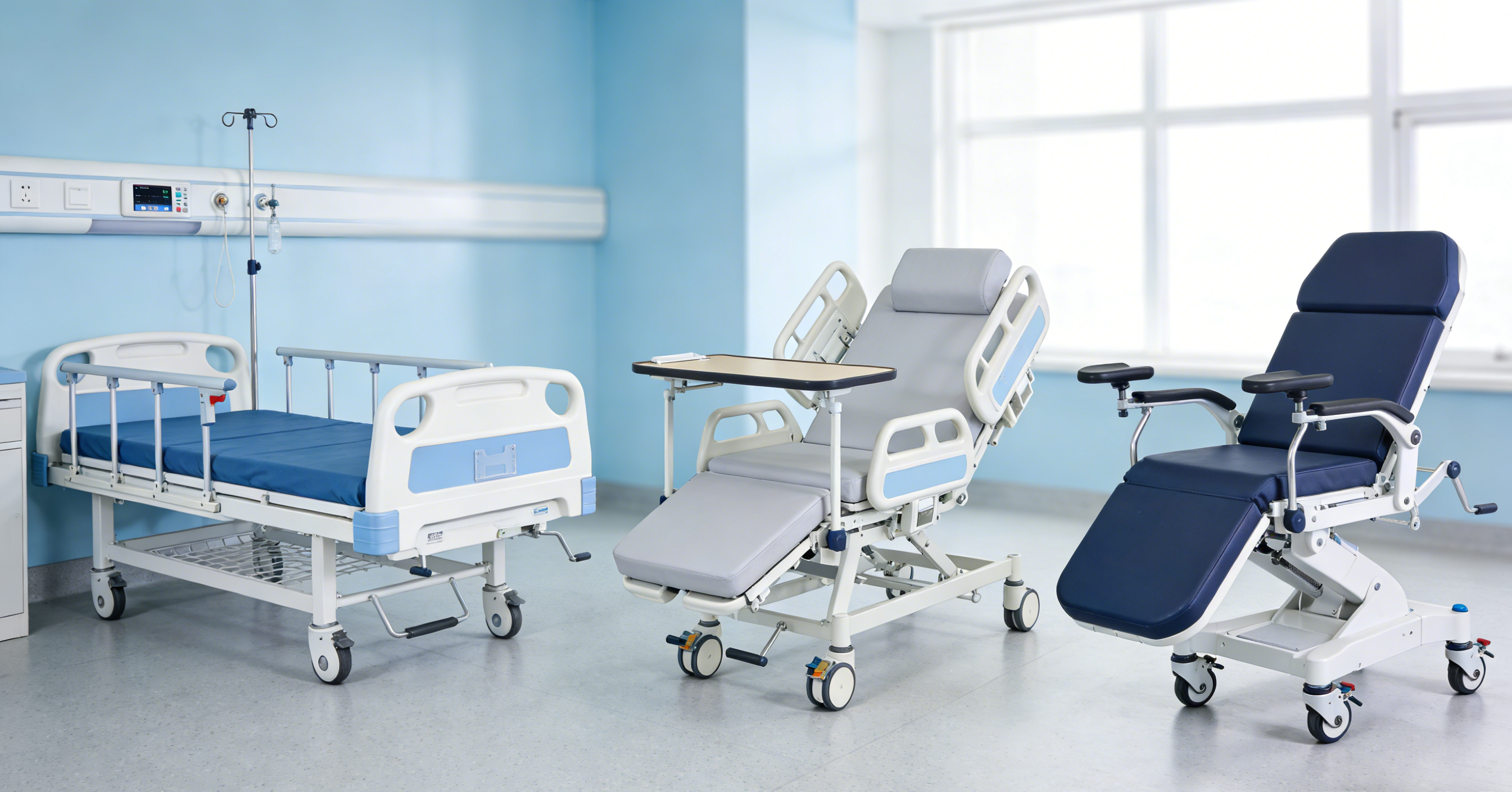
Q1: Why are hospital beds, nursing beds, and motorized shift beds critical in today's healthcare world?
A: Picture this: in packed wards and home care setups, these aren't mere resting spots. Hospital beds give that vital adjustability for folks bouncing back from ops or dealing with ongoing health stuff, nursing beds emphasize steady comfort for older adults or those with limited movement, and motorized shift beds take the hassle out of repositioning without anyone pulling a muscle. They zero in on everyday hurdles like easing worker burnout and getting patients settled quicker, keeping the flow steady and hassle-free.
Q2: How do these beds sort out everyday gripes in handling patients?
A: The real drag often comes from staff tweaking their backs on lifts or gear conking out from overuse. Our setups include solid motorized assists in shift beds to ditch the heavy manual stuff, with hospital and nursing beds sporting tough constructions that take the pounding without buckling or squeaking. Endgame? Fewer sick days for teams, less downtime for repairs, and more energy directed at patient needs over patchwork fixes.
Q3: What makes our fabrication stand out for dependable results?
A: It's all in the fine-tuned building process—we shape each piece with spot-on precision so things mesh perfectly and run without a hitch. For example, the engines in our motorized shift beds are dialed in for low-key, reliable action, and frames on hospital beds draw from rugged, non-rusting materials that shrug off repeated tweaks. This isn't fluff; it's about delivering gear that holds strong through shifts, sidestepping those random glitches that mess with routines.
Q4: Why should purchasing pros lean toward beds with top-tier build techniques?
A: With tight wallets and no room for breaks, it's smart to chase real worth. Our nursing beds pack clever angle shifts to dodge bedsores, and shift beds mesh right into daily drills for swift deployment. Buyers spot the wins: trimmed repair tabs, pumped-up crew morale, turning what could be a routine buy into a lasting edge.
Q5: How do we guarantee these beds thrive in demanding spots?
A: By hammering them with real-world tests and picking brains from on-the-ground staff to fine-tune bits like no-slip zones on shift beds or quick height swaps on hospital ones. This nails down bothers like wobbly loads or clunky sounds, so you know they'll deliver in hectic trauma bays or calm care homes, all while keeping safety front and center.
Q6: What's the broader impact of these beds on a site's daily grind?
A: They don't stop at one bed—they rev up the whole setup. Motorized shift beds can halve repositioning time, letting folks juggle more without crashing, and nursing beds speed healing with spot-on support. Bottom line: smoother shifts, safer vibes, and budget smarts that keep standards sky-high.
Dive into our reliable offerings—head over to:
1. Medical Electric Transfer Vehicle
– Electric-powered for safe patient transport between departments (ER, OR, ICU).
– Features: Adjustable height, safety belts, noiseless, eco-friendly battery operation.
2. Anti-Bedsore Electric Hospital Bed
– Prevents pressure ulcers with alternating-pressure mattresses.
– Motorized adjustments for head/foot/height to reduce caregiver strain.
3. Medical Electric Transfer Cart
– Sturdy electric cart for patient/equipment transport.
– Locking wheels, cushioned platform, and emergency-ready design.
Q1: Why are reliable nursing beds crucial for long-term care facilities? Problem: Flimsy beds → Pressure sores + Staff injuriesOur Solution: • Steady quiet lifts → Painless repositioning • Prevents bedsores & caregiver strainHidden Cost Savings:→ Reduced treatments & staff downtime Q2: How do you solve daily caregiver frustrations? Pain Points: • Sagging beds / Jammed rails / Slow controlsKey Features: • Smooth electric actuators → Reliable movement • One-motion rails → Secure locking • Heavy-duty frames → Maintain levelOutcome:→ Quick adjustments without back pain→ Zero time lost to repairs Q3: What ensures long-term durability? Precision Manufacturing: • Actuators: Silent even operation • Frames: Robust alloys (wear/moisture resistant) • Joints: Repeated-use toleranceResult:→ No creaks/failures → Consistent performance→ Reduced replacement costs Q4: ROI vs basic models? Basic Model Issues:Frequent breakdowns + Sore treatments + Staff absencesOur Value:✔️ Better pressure distribution → ↓ Wound care costs✔️ Ergonomic design → ↓ Injury risks✔️ Durable build → Extended service lifeROI Impact:→ Lower ongoing bills + Higher patient satisfaction Q5: How is reliability verified? Testing Protocol: • 1000s of lifts under varying weights • Daily cleaning with strong disinfectantsReal-World Refinements: • Intuitive buttons / Non-slip surfacesOutcome:→ Zero slips or jams in busy wards Q6: Broader facility benefits? Operational Impact: • Faster adjustments → Staff efficiency ↑ • Consistent support → Quicker healingStrategic Advantage:→ Lower turnover + Better reviews
READ FULLIn hospital safe patient transfer is a pivotal part of healthcare quality and safety management, directly impacting treatment outcomes and patient well being. As a core device for both patient transfer and bed care, high-end medical beds form an essential foundation for building a zero-risk care system. Centered on safe transfer and risk prevention, we analyze the design philosophy, application value and selection strategies of high-end medical beds through a professional Q&A format, offering clear references for medical institutions. Q1: Why does the core design logic of high-end medical beds in the safe transfer system revolve around zero-risk care? A1: Zero-risk care is a core management goal for modern medical institutions, and the transfer process is a high-risk scenario. Designed based on actual clinical needs, high-end medical beds integrate patient safety, procedural stability and operational norms into every structural detail and function. With robust mechanical structures, reliable locking mechanisms and seamless connection designs, they mitigate potential hazards such as postural changes, collisions and slips during transfer from the source. In this way, the equipment itself acts as the first line of defense for risk prevention, providing hardware support for safe transfer throughout the entire process. Q2: What targeted structural and functional designs do high-end medical beds feature to ensure transfer safety? A2: High end medical beds adopt high-strength stable frames to ensure overall firmness during movement and parking. Equipped with a precise height adjustment system, they can achieve seamless alignment with operating tables, examination equipment and ward beds, reducing the risks associated with lifting and moving patients. The bed body is fitted with a reliable braking and protection system, which locks securely when stationary and moves smoothly when in transit. Paired with an ergonomic bed surface and comfortable supportive materials, it lowers the risk of pressure ulcers and patient discomfort. Meanwhile, the beds are designed for easy attachment of monitoring devices and infusion sets, meeting the needs of continuous care throughout the transfer process. Q3: Compared with conventional medical beds, what advantages do high-end ones have in optimizing processes and reducing operational risks? A3: Conventional medical beds mostly only meet basic bed care needs and fall short in transfer flexibility and operational convenience, which is likely to increase the workload of medical staff and the probability of operational errors. High-end medical beds use lightweight, high-strength materials combined with smooth pushing and steering designs, allowing a single staff member to complete stable transfers and reducing manpower consumption and coordination mistakes. Their functional operations are simple and intuitive, with precise and controllable postural adjustments that minimize patient disturbance caused by repeated debugging. Through intelligent and humanized device design, they provide dual protection for both medical operations and patient safety. Q4: Why are high-end medical beds regarded as a core basic configuration for building a zero-risk patient care system? A4: Zero-risk care covers the entire process of bed rest, examination, transfer and rehabilitation, among which transfer is a key link connecting all stages and also where risks are most concentrated. High-end medical beds are not merely bed rest equipment, but also a safe carrier that links the entire care process. They can effectively reduce adverse events related to transfer, stabilize patients' vital signs and physical conditions, and enhance the continuity and safety of care. At the same time, reliable equipment eases the pressure on medical staff and improves work efficiency, enabling the care team to focus on professional diagnosis, treatment and care, and driving the continuous improvement of overall nursing quality and safety standards. Q5: From which dimensions should medical institutions judge the suitability of high end medical beds for their own needs during selection? A5: First and foremost, focus on scenario adaptability. Confirm the matching of functions and processes based on department layout, transfer routes, patient types and equipment connection requirements. Secondly, attach great importance to safety performance and quality stability: select products with robust structures, comprehensive protection and compliance with medical safety standards to ensure long-term and stable use. Meanwhile, balance humanization and practicality, reconciling patient comfort with the operational convenience of medical staff. Prioritize designs that are easy to clean and maintain, and adapt to the infection control requirements of medical institutions. Only in this way can the equipment truly serve the construction of a zero-risk care system and provide long-term support for patient safety and medical quality. For more professional information and product solutions of high-end medical beds, welcome to visit our official website: https://www.smartmedibed.com.
READ FULLQ1: As a procurement manager under pressure to cut costs, why consider upgrading medical beds when the current ones seem okay? A: "Okay" often means they're quietly adding to your expenses through downtime, staff complaints, and slower patient turnover. Our medical beds are designed with quick, stable adjustments that speed up exams and positioning without the usual wobbles or delays. This isn't about fancy features—it's about beds that reduce the risk of pressure sores and back injuries, helping your facility run smoother and saving on those extra nursing hours or replacement parts. Q2: What common headaches in daily hospital routines do these medical beds actually eliminate? A: The frustrations add up fast—beds that don't hold position, frames that creak under weight, or controls that lag when seconds count. We build our beds with smooth mechanisms that adjust quietly and lock firmly every time. Staff can reposition patients faster without strain, and patients stay comfortable longer, cutting down on calls for help or unexpected maintenance. It's a real relief for the constant small issues that drag productivity and boost costs. Q3: How does the craftsmanship behind these beds make them more dependable than standard options? A: We focus on precision machining for every component—joints fit tightly to prevent loosening over time, frames use durable alloys that resist corrosion from daily cleanings. Adjustments are calibrated for even, reliable movement without noise or failure. This hands-on approach means beds that endure heavy use without the typical breakdowns, giving you equipment that's ready when your team needs it most, not sitting in repair. Q4: If you're focused on ROI, why pick these medical beds over budget alternatives? A: Budget beds look cheap upfront, but rack up costs with frequent fixes, staff injuries from poor ergonomics, and delayed patient discharges. Ours delivers quick returns: fewer pressure-related complications mean less treatment spending, reliable performance cuts maintenance bills, and faster workflows improve throughput. It's a calculated choice that lowers long-term expenses while keeping your facility compliant and efficient. Q5: What testing ensures these beds stand up to the demands of real-world use? A: We simulate the chaos of actual shifts—thousands of adjustments, varying weights, and rigorous cleaning cycles. Input from frontline staff refines details like intuitive controls and stable rails. This process weeds out weaknesses like uneven tilting or weak spots, so you get beds that perform consistently in high-volume environments, with safety features that hold strong without compromise. Q6: Overall, how do better medical beds impact your facility's operations and patient care? A: They streamline everything—quicker setups for procedures, better patient comfort leading to faster recoveries, and less strain on staff. You see reduced risks, happier teams, and a bottom line that benefits from fewer incidents and smoother days. It's about creating a space where care comes first, without the equipment getting in the way. For more on medical beds that deliver real value, visit https://www.smartmedibed.com/.
READ FULL